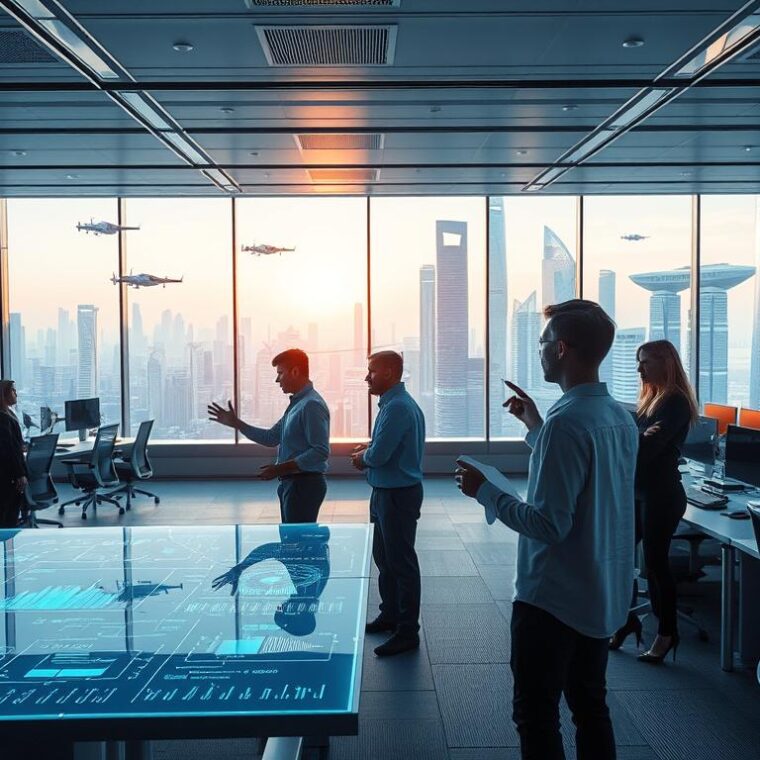
By 2030, offices will change a lot thanks to Artificial Intelligence (AI). Almost half of the tasks we do now could be done by machines. This will change how we work.
This change is not just about doing tasks faster. It’s about making work better, more efficient, and flexible. As offices get used to this, AI will play a big role in shaping the future of work.
Key Takeaways
- Automation could significantly alter task distribution in the workspace.
- AI integration is expected to enhance productivity and flexibility.
- The modern office will need to adapt to technological advancements.
- Changes are anticipated in how tasks are allocated and managed.
- The role of humans in the workspace will evolve alongside AI.
The Current State of AI in UK Workplaces
AI in UK workplaces is more than a trend; it’s a big change. It’s making industries look different. Businesses are using AI to be more efficient and competitive globally.
AI is changing how UK businesses work. It automates tasks and improves customer service. It’s key for innovation and growth in today’s business world.
Adoption Rates Across Different British Industries
AI adoption rates differ in UK industries. Finance and healthcare lead, using AI for data and patient care. Traditional sectors are slower, but they’re researching AI’s uses.
Key industries leading in AI adoption include:
- Financial Services
- Healthcare
- Retail
- Manufacturing
Common AI Applications in Today's UK Offices
AI is used in many ways in UK offices. Virtual assistants, predictive analytics, and automated customer service are common. These tools boost efficiency and productivity.
The use of AI in UK workplaces is constantly changing. As technology improves, we’ll see more AI applications in different sectors.
The Evolution of AI & The Future Workspace
AI is changing workspaces, making them more efficient and interactive. As we look to 2030, AI in offices will bring big changes.
From Basic Automation to Intelligent Collaboration
The role of AI in workspaces has changed from basic automation to intelligent collaboration. Modern AI systems work alongside humans, boosting productivity and creativity. “AI is not just about automating tasks; it’s about augmenting human capabilities,” says Andrew Ng, AI pioneer.
This collaboration will change the future office. It will become a place of innovation and efficiency.
Key Technologies Driving Workplace Transformation
Several key technologies are driving this change in the workspace. These include:
- Advanced machine learning algorithms that enable predictive analytics
- Natural Language Processing (NLP) that facilitates human-AI interaction
- Internet of Things (IoT) devices that create smart, connected environments
As
“The future of work is not just about technology; it’s about creating a workspace that is conducive to human well-being and productivity.”
The future office will adapt to its occupants’ needs. It will use these technologies for a seamless and efficient work environment.
Physical Transformation of Office Spaces
As AI grows, UK businesses are changing their offices. They are making their spaces more adaptable with new tech. This change is driven by the need for better workplaces.
Smart Architecture and Adaptive Environments
Smart architecture is changing office design. Offices now adjust to what people need, thanks to adaptive environments. This includes better lighting, temperature control, and flexible spaces.
For example, Biophilic design brings nature into workspaces. It boosts wellbeing and creativity. AI helps make these spaces even better by improving light and air quality.
IoT Integration and Sensor-Rich Workplaces
The Internet of Things (IoT) is making UK offices smarter. IoT devices track things like how full the office is and how much energy it uses. This helps save resources and cut down on waste.
Sensors can tell when a meeting room is busy and adjust the lights and temperature. This makes the office more comfortable and saves energy. IoT also helps set up smart meeting rooms with cool tools and AI for presentations.
Spatial Computing and Mixed Reality Zones
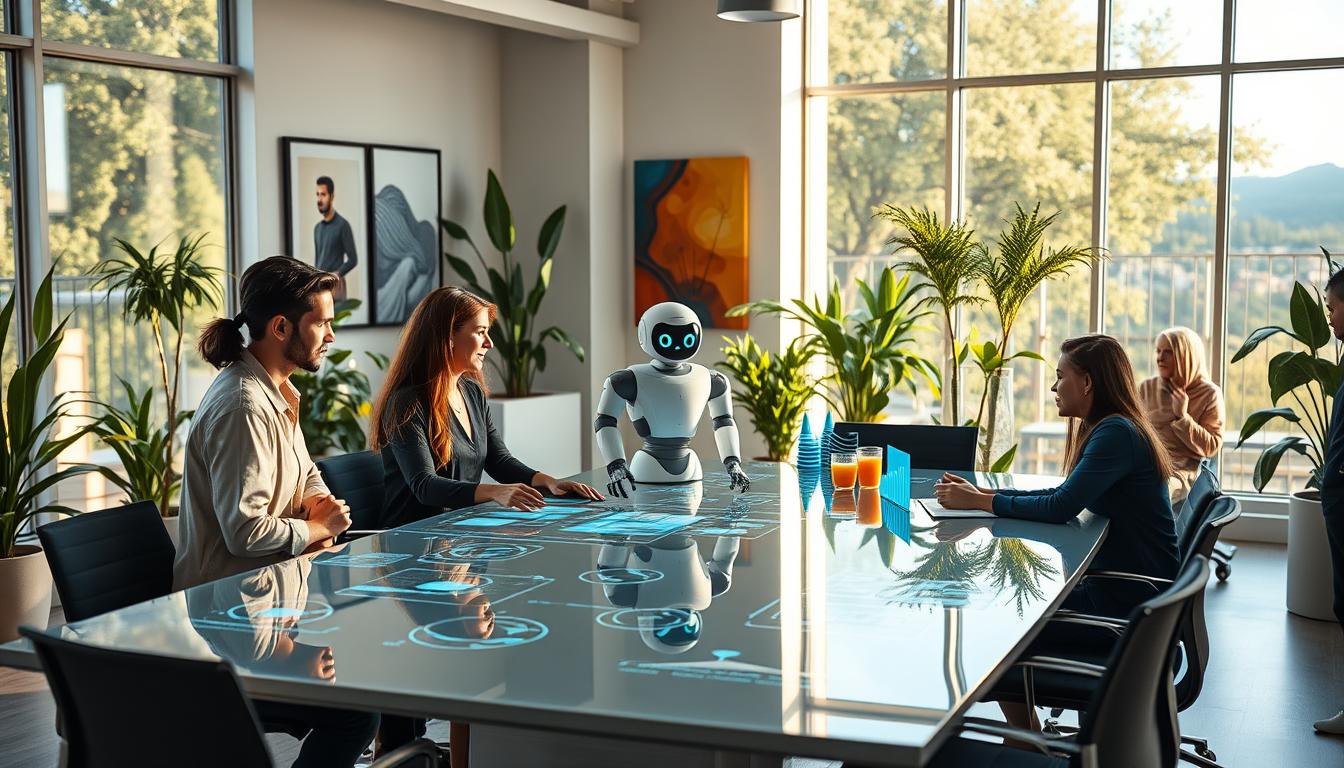
Spatial computing and mixed reality (MR) are adding new levels to offices. Mixed Reality Zones offer immersive experiences for everyone. They’re great for virtual meetings and team projects.
spatial computing makes workspaces more interactive. For example, MR glasses let people use virtual whiteboards. This makes teamwork easier and reduces paper use.
The Hybrid Work Revolution
The future of work is changing, with AI leading the way. Organisations are finding new ways to mix physical and virtual workspaces. This change is making work more flexible and productive.
AI-Powered Remote Collaboration Tools
AI is making remote work better with collaboration tools. These tools boost productivity and make work more inclusive. For example, AI can translate languages in real-time and offer suggestions during meetings.
These tools have many useful features:
- Automated task assignment and tracking
- Intelligent document management
- Enhanced security, like AI-powered intrusion detection
Studies show that using AI in work tools improves productivity and job satisfaction.
| Feature | Description | Benefit |
|---|---|---|
| Automated Task Assignment | AI assigns tasks based on workload and skillset | Increased productivity |
| Intelligent Document Management | AI organises and retrieves documents efficiently | Reduced time spent searching for information |
The New Balance Between Physical and Virtual Presence
Hybrid work models are changing how we work. Some people love working from home, while others prefer the office. It’s about finding a balance that suits everyone.
“The key to successful hybrid work is finding a balance that works for everyone. It’s about creating a seamless experience that integrates both physical and virtual elements.” –
Companies are using technology to support both remote and office work. For instance, AI can help manage office space better. This ensures offices are used well.
By embracing hybrid work, organisations can create a better work environment. This environment is flexible, productive, and inclusive for all employees.
AI-Driven Personalisation of Work Environments
AI is changing workspaces, making offices that fit their users’ needs. It’s not just about looks; it’s about making work better, healthier, and happier.
Customised Workspaces Based on Individual Preferences
The future of workspaces is about making them fit each person’s style. AI analyses how people work and changes things like lighting and noise to match what they like. This makes work more comfortable and productive.
Some people prefer quiet, while others like it lively. AI learns these likes and changes the space to fit, making work better for everyone.
Ambient Intelligence and Responsive Offices
Ambient intelligence goes further, making offices that meet both personal and team needs. AI sensors and IoT devices create a space that changes with the team’s needs in real-time.
This means adjusting lights and temperature in meeting rooms based on who’s there. It also books bigger rooms when teams grow. Such offices improve work life and use resources better.
By using AI, companies can make workspaces that are great for current and future employees. This makes them stand out in a tough job market.
The Changing Role of Human Workers
AI is changing UK workplaces, and humans are adapting. It’s not about humans versus machines. It’s about working together.
Skills Evolution and New Job Categories
AI is changing what skills are needed in UK jobs. New job categories are emerging like AI trainers and ethicists. Skills like critical thinking and creativity are becoming more important.
Automation is taking over simple tasks. This lets humans do more complex tasks that need emotional intelligence and empathy. The workforce in UK businesses is becoming more skilled and adaptable.
Human-AI Collaboration Models
In UK offices, working with AI is key. Hybrid intelligence combines human and machine strengths. This makes work more productive and innovative.
AI handles data, while humans provide strategy and creativity. This teamwork leads to better decisions and problem-solving. It’s set to bring big changes to many industries.
The Rise of the Augmented Knowledge Worker
The future office in the UK will see more augmented knowledge workers. These professionals use AI to do their jobs better. AI helps with tasks like data analysis.
Knowledge workers can then focus on strategy and creativity. This change will make UK businesses more productive and competitive.
AI and the Transformation of Office Management
Office management is changing a lot thanks to AI. It’s making things better by improving how we use resources and manage spaces. This change is making work more efficient, saving money, and making employees happier.
Predictive Resource Allocation and Space Optimisation
AI is really helping with planning how to use office space better. It looks at how spaces are used and suggests the best layouts. This means resources are used well and the space fits what people need.
For example, AI can figure out when and where meetings will happen. This helps schedule meetings better and use space wisely. It cuts down on wasted space and makes the office more efficient.
Automated Facilities Management and Maintenance
AI is also changing how we manage and maintain offices. It automates routine tasks and knows when things need fixing. This stops problems before they start and keeps the office running smoothly.
AI can also control things like lighting, temperature, and security. This makes the office a better place to work. It lets facilities managers work on bigger projects that improve the work environment.
In short, AI is changing office management for the better. It makes businesses more efficient, saves money, and meets employee needs. As AI gets better, we’ll see even more ways it can improve workspaces.
Data-Driven Decision Making in Workspace Design
In the UK, data is key in shaping workspace design. The future office is more than looks. It’s about making spaces that boost productivity, wellbeing, and happiness through data-driven decision making.

Data analytics help UK businesses make smart choices, not just guess. They look at different data to spot trends and patterns. This guides their workspace plans.
Analytics for Optimising Productivity and Wellbeing
Data analytics are vital for better workspace design. They help see how employees use their space. For example, data on meeting rooms helps plan space better. Insights on how people move around guide workflow design.
Also, data helps make spaces that support health and productivity. Adjusting lights and temperatures based on who’s there is one way. Creating quiet spots is another.
Privacy Considerations in the Monitored Workplace
Data analytics bring benefits but also privacy concerns. UK businesses must find a balance. They need to protect privacy while using data for insights.
They should also anonymize data to protect privacy. This builds trust. Employees feel safe in a space that’s monitored for betterment, not spying.
Sustainability and AI in Future UK Offices
AI is set to be key in making UK offices greener by 2030. As we all become more aware of the environment, AI will change how businesses work. It will make them more eco-friendly.
Energy Efficiency and Smart Resource Management
AI will help a lot with energy efficiency and smart resource management. It can use data from IoT devices to cut down on energy use in offices. For example, AI can change the lights and heating based on who’s there and the time, saving a lot of energy.
“Using AI for energy management can save a lot of money and cut down on carbon emissions,” a report by a leading energy firm says.
Reducing Environmental Impact Through Intelligent Systems
AI can also cut down the environmental harm of offices with intelligent systems for waste, water, and more. For instance, AI can guess when waste needs to be taken out, cutting down on waste truck trips and emissions.
With AI, UK offices can lower their environmental impact and make work healthier and more productive. A sustainability expert says, “AI can change how we think about being green at work, making it better and more effective.”
- Optimizing energy consumption through AI-driven analysis
- Implementing smart resource management systems
- Reducing waste and improving recycling practices
As we aim for a greener future, AI’s role in UK offices will grow. By using AI, businesses can lead in sustainability efforts. This will help make the future greener for everyone.
Challenges and Barriers to Implementation
The future office, powered by AI, faces many challenges for UK businesses. As they try to add AI to their work, they hit several obstacles. These can slow down their progress.
Technical Infrastructure Requirements for UK Businesses
Ensuring the right tech setup is key for AI. This means having strong hardware, advanced software, and fast internet. UK companies need to check their current tech and see what needs to be improved for AI.
Key infrastructure considerations include enough storage, fast processing, and strong security. Companies might have to buy new tech or use cloud services for AI.
Cost Considerations and ROI Analysis
AI costs a lot, and UK businesses must think about the money. This includes the cost of the tech, upkeep, updates, and training.
Doing a detailed ROI (Return on Investment) analysis is vital. It helps see the benefits and if the money spent is worth it. Businesses should compare costs to expected gains in productivity and efficiency.
Workforce Adaptation and Training Needs
Getting the workforce ready for AI is another big challenge. It’s not just about learning new tech skills. It’s also about adjusting to new work methods and working with AI.
UK businesses should invest in training that covers both tech skills and soft skills. This will help employees adapt smoothly and get the most out of AI.
UK-Specific Regulatory and Ethical Considerations
UK businesses using AI face a complex set of rules and ethics. It’s vital for them to know the laws and moral guidelines for AI use.
Data Protection and GDPR Implications
The General Data Protection Regulation (GDPR) is a major law for UK data handling in AI. Following GDPR is key, focusing on data minimisation, accuracy, and openness. Companies must be clear on data collection, processing, and storage in AI.
| GDPR Principle | AI Implementation Consideration |
|---|---|
| Data Minimisation | Ensure AI systems only process necessary data. |
| Accuracy | Regularly review AI outputs for accuracy. |
| Transparency | Clearly communicate how AI decisions are made. |
Ethical AI Implementation in British Business Culture
Ethics are as important as rules in AI use in UK businesses. It’s about making AI fair, transparent, and accountable. Companies should think about AI’s effects on staff, customers, and society.
Fairness means no bias in AI choices. Transparency means AI decisions are clear. Accountability means companies are answerable for AI results.
By tackling these rules and ethics, UK businesses can use AI wisely and responsibly.
Preparing Your Business for the AI-Powered Workspace
AI is changing UK workplaces in big ways. By 2030, businesses need to get ready for this change. They must adopt new tech and rethink their workspaces.

Strategic Planning for Technological Integration
Planning is vital for adding AI to your workspace. Start by checking your current tech and seeing where AI can help most. Then, make a plan for AI adoption, thinking about costs, training, and benefits.
It’s important to talk to everyone in your company about AI. This ensures AI solutions really solve business problems. It helps avoid using tech just for its own sake, focusing on better productivity and work experience.
Building an Adaptable and Future-Ready Workforce
AI is changing work, so your team needs to adapt and learn. Invest in training that teaches new tech skills and encourages learning and innovation.
By preparing your team for the future, you’ll be ready to use AI’s benefits. Focus on skills like data analysis, AI ethics, and working with AI. This way, your team can thrive in an AI-powered workspace.
Conclusion: Embracing the AI-Transformed Office of 2030
Looking ahead, AI will change the office world. By 2030, offices will be smarter and more efficient. They will also meet each person’s needs better.
AI will make work more flexible and hybrid. Technology and human skills will work together. AI tools will automate tasks and help make decisions, giving us more time for creative work.
Businesses need to get ready for this change. They should invest in new tech, train employees, and be open to new ideas. This way, they can use AI to its fullest and make work both productive and rewarding.
It’s important to keep the human touch in the office of the future. Technology should help us work better together, not replace us. By finding this balance, we can make a workspace that is both efficient and enjoyable.