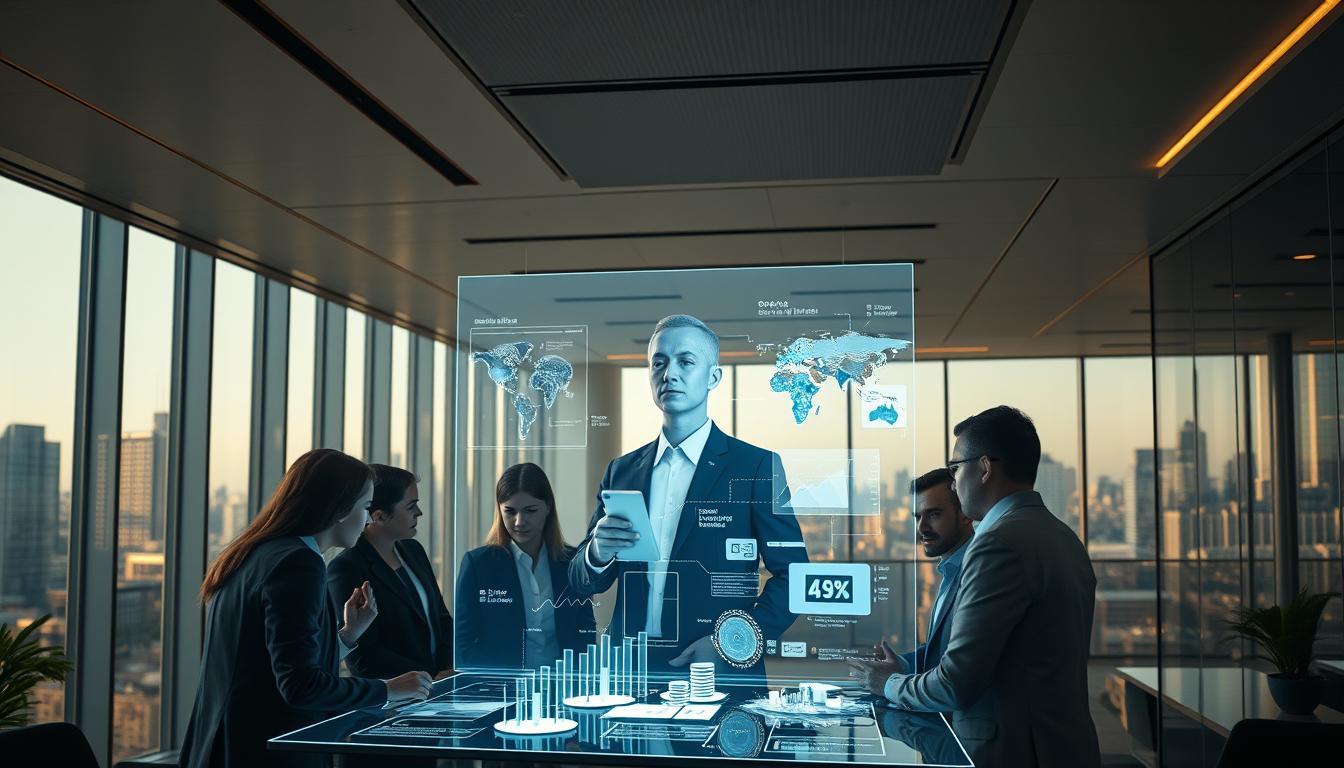
The UK’s business world is on the verge of a big change. This change comes from the use of immersive technologies like AR and VR. A recent report shows the UK’s AR and VR market is set to grow a lot. This will change how industries work and improve customer experiences.
Digital transformation is now a must for businesses to keep up. By using AR and VR, UK companies can be more innovative. They can also work more efficiently and give better customer experiences.
Key Takeaways
- The UK’s AR and VR market is poised for significant growth.
- Businesses are leveraging AR and VR for digital transformation.
- Immersive technologies are improving customer experiences.
- Operational efficiency is being improved through AR and VR adoption.
- UK businesses are innovating with AR and VR technologies.
Understanding AR and VR Technologies
Exploring immersive technologies like AR and VR is key. It’s important to know what they are and how they work.
These technologies are changing how businesses operate. It’s vital to understand their unique features and uses.
What is Augmented Reality (AR)?
Augmented Reality adds digital info to the real world. It makes things better for the user. But, it doesn’t create a fake world like VR does.
AR can be seen on many devices. This includes smartphones, tablets, and smart glasses. It’s easy to use.
What is Virtual Reality (VR)?
Virtual Reality pulls you into a digital world. It blocks out the real one. You can’t see or touch the outside world.
To use VR, you need a headset or special gear. It’s designed to give you a full, immersive experience.
Key Differences Between AR and VR
The main difference is how they deal with reality. AR adds to the real world. VR creates a new, digital one.
This affects how businesses use them. AR is good for tasks that need real-world interaction. VR is best for training and simulations.
The Importance of AR VR Transformation in Business
AR VR transformation is not just a trend; it’s essential for businesses to stay ahead in the UK market. As companies face digital transformation challenges, using augmented reality (AR) and virtual reality (VR) is becoming key.
AR and VR can change many business areas. They improve customer experiences and make internal processes smoother. These technologies offer many benefits that help businesses grow.
Enhancing Customer Engagement
AR and VR are great for enhancing customer engagement. They offer immersive and interactive experiences, better than old marketing ways.
For example, shops can let customers virtually try on products with AR. This makes shopping better and can boost sales. VR can also help tell brand stories in a deep way, connecting with customers more.
Streamlining Operations
AR and VR also help streamline operations inside businesses. VR is good for training staff in a safe space to learn new skills.
AR helps in complex manufacturing by giving workers clear, step-by-step guides. This cuts down on mistakes and makes things more efficient.
Gaining a Competitive Advantage
In today’s fast business world, getting a competitive advantage is key. Using AR and VR lets businesses stand out and lead in their markets.
Companies that adopt AR VR can see better customer satisfaction, more efficient operations, and higher profits.
Industries Benefiting from AR and VR
AR and VR are changing many UK industries. They make customer experiences better and help businesses work more efficiently. These technologies also encourage new ideas and ways of doing things.
Education and Training
The UK’s education sector is changing fast with AR and VR. These tools offer immersive learning experiences. They make hard subjects easier to understand.
Medical students can now practice surgeries in a virtual world. Engineering students can see complex machines in 3D. This makes learning more fun and effective.
Healthcare Innovations
AR and VR are making healthcare better in the UK. Virtual reality therapy helps people with anxiety and PTSD. It gives them a safe place to face their fears.
AR helps surgeons see patient data during operations. This makes surgeries more precise and cuts down recovery times.

Retail Experiences
The retail sector is using AR to improve shopping. Customers can try products virtually, from furniture to clothes. This reduces the need for physical stores and boosts happiness.
This tech is great for online shops. It helps them feel more like real stores.
Real Estate Virtual Tours
VR is changing real estate by allowing virtual property tours. Buyers can explore homes from anywhere. This saves time and attracts more buyers from around the world.
As AR and VR get better, they will help more industries in the UK. This will lead to even more innovation and change.
Real-World Examples of AR and VR in Action
In the UK, businesses are using AR and VR to change how they work. These technologies help improve customer service, make processes smoother, and give them an edge over rivals.
Case Study: Retail Companies Utilizing AR
Retailers are leading the way with AR. For example, Topshop has introduced AR try-on in their stores. This lets customers see how clothes fit without trying them on.
“The use of AR has significantly enhanced our customers’ shopping experience, leading to increased sales and customer satisfaction.” – Topshop Retail Manager
AR in retail offers many benefits. These include:
- Enhanced customer experience
- Increased sales
- Reduced product returns
Success in Training Programs through VR
VR is making a big impact in training. Rolls-Royce uses VR to train its engineers. It creates a safe, immersive space for learning complex tasks.
| Industry | VR Training Benefits |
|---|---|
| Aerospace | Improved skill acquisition, reduced training time |
| Healthcare | Enhanced surgical training, improved patient outcomes |
AR in Manufacturing: A Case Analysis
AR is also changing manufacturing. Siemens uses AR to guide workers in real-time. This improves efficiency and cuts down on mistakes.
AR in manufacturing boosts efficiency and reduces errors. As AR technology gets better, we’ll see even more creative uses in the industry.
How to Implement AR and VR in Your Business
For a successful AR VR Transformation, planning and execution are key. Businesses aiming to use immersive technologies must consider several important factors. This ensures a smooth and effective implementation.
Assessing Needs and Capabilities
Before starting with AR and VR, it’s vital to understand your business needs and capabilities. You need to know your goals and where AR and VR can help. Also, check if your current technology fits with these new solutions.
Here are some steps to follow:
- Identify your business objectives and how AR or VR can support them.
- Evaluate your current technology stack and its compatibility with AR and VR solutions.
- Assess the skills and training required for successful implementation.
Choosing the Right Technology Partner
Finding the right technology partner is essential for a successful AR VR Transformation. Look for partners with experience in your industry and a good grasp of immersive technologies.
When looking at partners, consider their:
- Experience with similar projects.
- Technical capabilities and compatibility with your existing systems.
- Ability to provide ongoing support and maintenance.
Budgeting for AR and VR Implementation
Budgeting is a critical part of implementing AR and VR technologies. You need a detailed budget that covers the initial costs and ongoing expenses like maintenance and training.
Important budgeting points include:
- Hardware and software costs.
- Development and integration expenses.
- Training and support costs.
By carefully assessing your needs, choosing the right partner, and budgeting well, you can achieve a successful AR VR Transformation. This will help grow your business and improve customer experiences.
Challenges in Adopting AR and VR Solutions
Businesses face many challenges when adopting AR and VR. These technologies offer great benefits but come with obstacles.
Technical Limitations
One big challenge is the technical hurdles. Ensuring hardware and software work well is key. High-quality AR and VR need strong infrastructure, like fast processors and clear displays.
Integrating AR and VR with current systems is hard. Companies must check their tech and see what upgrades are needed.

Employee Training and Acceptance
Training staff to use AR and VR is another big challenge. It’s not just about the tech; it’s about how to use it every day. Good training is key to getting the most from AR and VR.
Getting staff to accept new tech is also important. Some might be hesitant. It’s vital to explain the benefits and offer support.
| Training Aspect | Importance | Implementation Strategy |
|---|---|---|
| Technical Skills | High | Hands-on training sessions |
| Integration with Workflow | High | Guided implementation |
| Ongoing Support | Medium | Regular check-ins and feedback |
Cost Considerations
The cost of AR and VR is a big challenge. It includes the initial cost of equipment and software, plus training and upkeep. Businesses need to plan their budget carefully for AR and VR.
To reduce costs, companies can look at financing options. Leasing equipment or finding scalable solutions with tech providers can help.
Measuring the ROI of AR and VR Investments
In the UK, businesses are investing more in AR and VR. It’s important to measure the return on investment (ROI) to see if it’s worth it. Companies need to show how these technologies benefit them.
To understand the impact of AR and VR, we need to pick the right metrics. Key Performance Indicators (KPIs) are key here. They help businesses see if their AR and VR efforts are working.
Key Performance Indicators to Consider
When looking at the ROI of AR and VR, certain KPIs are important. These include:
- Customer Engagement Metrics: How AR and VR affect customer interaction and satisfaction.
- Training Efficiency: How VR training improves employee skills and cuts training time.
- Operational Cost Savings: The savings in operational costs from using AR and VR.
- Sales and Revenue Growth: The effect of AR and VR on sales and revenue.
By focusing on these KPIs, businesses can better understand their AR and VR investments’ ROI.
Success Metrics for AR and VR Initiatives
Success metrics for AR and VR projects depend on their goals. But, some common ones are:
| Metric | Description | Example |
|---|---|---|
| Customer Retention Rate | Percentage of customers kept over time | A 25% increase in customer retention |
| Training Completion Time | Time to finish training programs | A 30% reduction in training time |
| Sales Conversion Rate | Percentage of leads turned into sales | A 15% increase in sales conversions |
These metrics give valuable insights into the success of AR and VR projects in meeting business goals.
Future Trends in AR and VR Technologies
AR and VR are changing how businesses work, opening up new ways to grow and connect with customers. It’s key to grasp their future impact.
The Rise of 5G and Its Impact
5G technology is about to change AR and VR. It will bring faster data, lower delays, and better connections. This means smoother, more real experiences, which are vital for some apps.
With 5G, businesses will see big leaps in AR and VR use. This is true for healthcare, education, and retail. The new tech will make experiences more detailed and engaging, boosting innovation and customer happiness.
Potential Developments in AR and VR Applications
Future AR and VR will aim for even more immersive and interactive experiences. Some areas to watch include:
- Enhanced training programs for employees
- Virtual product demonstrations
- Immersive customer experiences
- Remote collaboration tools
| Industry | Potential AR/VR Applications | Benefits |
|---|---|---|
| Education | Interactive learning experiences, virtual field trips | Enhanced engagement, improved understanding |
| Healthcare | Training simulations, patient education | Improved skills, better patient outcomes |
| Retail | Virtual product demos, immersive shopping experiences | Increased sales, enhanced customer satisfaction |
As AR and VR evolve, businesses need to keep up to stay competitive. Knowing the future trends and developments helps companies prepare for the opportunities and challenges ahead.
Getting Started with Your AR VR Transformation Journey
Starting your AR VR Transformation journey can change your UK business for the better. It can lead to digital transformation and better customer experiences. First, you need to figure out what your business needs and where AR and VR can make a big difference.
Initial Business Steps
Begin by checking your current tech setup and what you need for AR and VR. You might need to buy new gear or software. Also, training your team to use these new tools is important.
Resources for Implementation
There are many resources to help UK businesses with their AR VR Transformation. You can find tech partners, online courses, and reports. Using these can make your transition smoother and help you get the most out of AR and VR.
In the UK, embracing AR VR Transformation is key for staying ahead. By starting to use AR and VR, businesses can find new chances and see big returns on their investment.